What Is a DOT Fitting? What "DOT-Approved" Really Means

Table of Contents
A DOT fitting is a tube fitting built and certified for a commercial vehicle's air-brake system — it connects the tubing that carries air to the brakes, and it's certified to Federal Motor Vehicle Safety Standard No. 106 (FMVSS No. 106). "DOT" points to the U.S. Department of Transportation framework these parts are made to; it does not mean the government inspected and stamped that specific fitting. This article explains what a DOT fitting is, what "DOT-approved" really means, and where these fittings are used.
What Makes a Fitting a "DOT" Fitting
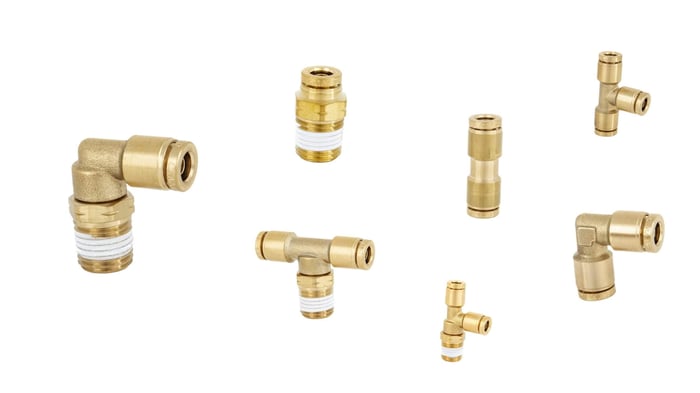
A DOT fitting is a brake-system tube fitting that meets the federal requirements for air-brake components. It connects the tubing at the many points where an air line terminates in a truck or trailer's brake system. What sets it apart from an ordinary pneumatic fitting isn't how it looks — it's that it's built and certified to FMVSS No. 106 and the applicable SAE standards for the job, and designed for the correct air-brake tubing (SAE J844 nylon).
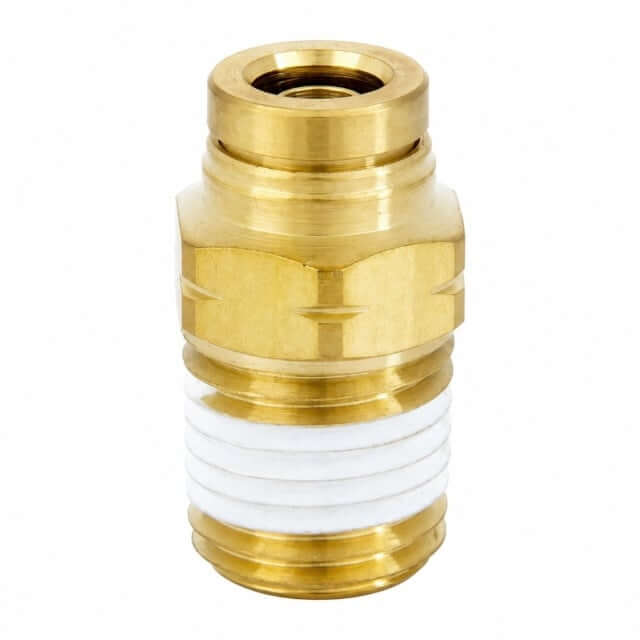
DOT fittings come in a few connection styles — push-to-connect (push the tube in by hand) and compression (tighten a nut) are the two common ones — and in different body materials, most often brass.
What "DOT-Approved" Actually Means
Here's the part that surprises many buyers: the Department of Transportation does not inspect individual fittings or issue a "DOT-approval" sticker. Compliance works by self-certification. Under 49 U.S.C. Chapter 301, the manufacturer certifies that its equipment meets the applicable Federal Motor Vehicle Safety Standard, and NHTSA audits compliance rather than pre-approving parts. NHTSA has stated directly that it does not approve motor vehicle equipment.
So "DOT-approved" is really shorthand for "the manufacturer certifies this part complies with FMVSS No. 106." That's why the manufacturer and the documentation behind a fitting matter — the label alone, without a named maker and a documented standard, doesn't prove much. (For how to check that, see How to Spot Fake or Non-Compliant "DOT" Fittings.)
Where DOT Fittings Are Used
DOT fittings connect the air-brake tubing throughout a commercial vehicle — the service and parking brake circuits, trailer supply and service lines, and related plumbing. Under 49 CFR 393.45(a), all brake tubing, hoses, hose assemblies, and end fittings must meet FMVSS No. 106, so any connection in that system calls for a DOT-compliant fitting.
They're not for every connection on the truck, though. General shop air, machine plumbing, and non-brake accessories don't require DOT certification — a standard pneumatic fitting is the right choice there. And push-to-connect DOT fittings specifically are designed for the tubing runs, not the high-movement joints between the frame and axle or between a towed and towing vehicle, which use flexing hose assemblies instead.
Do You Need a DOT Fitting?
The test is simple: if the connection is part of a commercial-vehicle air-brake system, yes — use a DOT-compliant fitting. If it isn't, you don't need to pay for the certification. For the fuller picture of the whole category, start with our complete guide to DOT metal push-to-connect fittings.
Shop DOT Metal Push-to-Connect Fittings →
📚 Related Reading
→ DOT Metal Push-to-Connect Fittings: The Complete Guide
→ DOT Fitting Compliance Explained: FMVSS No. 106, SAE J844 & the Standards
Educational information only. This article is provided by PneumaticPlus for general educational and informational purposes only. It is not legal, engineering, regulatory, or compliance advice, and it creates no advisory relationship. Standards and regulations — including FMVSS, SAE, and FMCSA/CVSA rules — are periodically revised, may be superseded, and vary by jurisdiction and application. Nothing here should be relied on to determine compliance. All specifications, standards, and regulatory references must be independently verified against the current official primary sources (the eCFR, SAE International, NHTSA, and CVSA) and the manufacturer's datasheet, and confirmed with a qualified professional before any purchasing, installation, maintenance, or compliance decision. PneumaticPlus makes no representation or warranty as to the accuracy, completeness, or currency of this information and disclaims all liability for reliance on it.