Preventing Contamination in Compressed Air Systems

Compressed air powers equipment across demanding industrial environments, but the air entering a compressor rarely starts clean. Dust, moisture, oil, and other unwanted material can move through the system and interfere with downstream components. Preventing contamination in compressed air systems requires a deliberate approach to air treatment, maintenance, and equipment selection. When facilities control contaminants from intake through point of use, they can protect pneumatic equipment, maintain consistent performance, and reduce avoidable maintenance problems over time.
Understand Where Contamination Comes From
Every compressed air system draws atmospheric air into the compressor. That incoming air can carry dust, pollen, water vapor, and fine airborne particles.
The compressor and distribution system can introduce additional contaminants. Depending on compressor design and operating conditions, oil may enter the air stream. Corrosion, pipe scale, seal material, or other debris can also develop inside aging components and distribution lines. Effective contamination control therefore requires attention to both incoming air and conditions within the system itself.
Control Particles With Proper Filtration
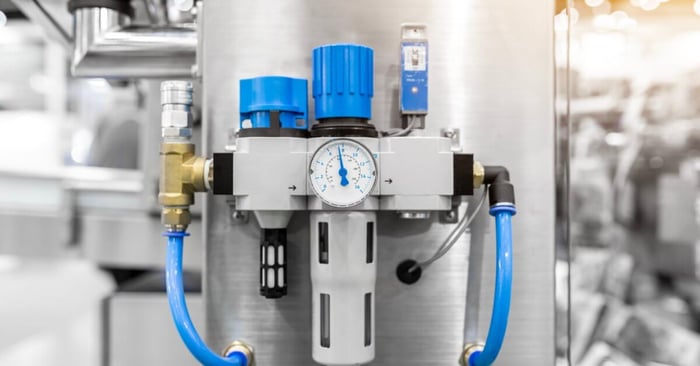
Air filters provide a primary defense against solid contaminants. A properly selected filter captures particles before they reach sensitive valves, cylinders, tools, or other pneumatic components. Removing this material helps prevent restricted passages and premature component wear.
Filter selection should match the application rather than follow a one-size-fits-all approach. Different filtration levels address different contaminants and air-quality requirements. Installing filtration that is unnecessarily restrictive can create unwanted pressure drop, while insufficient filtration can leave downstream equipment exposed.
Filter placement also matters. A general-purpose filter can remove contaminants near the main air supply, while additional filtration closer to critical equipment can provide more targeted protection.
Manage Moisture Before It Causes Problems
Water represents one of the most common concerns in compressed air systems. Atmospheric air contains water vapor, and compression does not eliminate it. As compressed air cools, vapor can condense into liquid water inside piping and equipment.
Moisture can contribute to corrosion and interfere with pneumatic component operation. Allowing condensate to remain in the system can create recurring problems even when particle filtration is adequate.
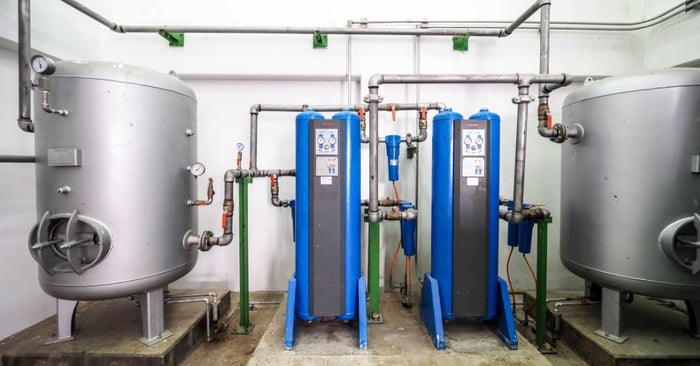
Separators, drains, and air dryers help manage moisture at different stages of the system. Facilities should also make sure drains function correctly so collected water leaves the system instead of returning to the air stream.
Address Oil and Aerosol Contamination
Some applications require greater control over oil carried in compressed air. Oil can appear as liquid droplets or fine aerosols that standard particulate filtration may not adequately address. This contamination can affect sensitive equipment and processes.
Coalescing filters can help remove fine oil aerosols and small liquid particles from compressed air. Applications with stricter air-quality requirements may need multiple treatment stages designed around the specific contaminants present.
Operators should not assume that one filter solves every contamination problem. Particle removal and aerosol removal involve different filtration needs. Matching treatment equipment to the actual contaminant helps protect performance without adding unnecessary restriction.
Maintain Filters and Drains Consistently
Even correctly selected air-treatment equipment cannot perform indefinitely without maintenance. Filter elements collect contaminants over time, which increases resistance to airflow. A neglected filter can eventually create excessive pressure drop and reduce system efficiency.
Maintenance teams should inspect filters according to operating conditions and equipment recommendations. Replacing elements when needed helps maintain airflow while preserving filtration performance.
Automatic and manual drains also deserve regular inspection. A blocked or malfunctioning drain allows collected condensate to accumulate. Checking drain operation as part of routine maintenance helps keep separated water and oil from becoming downstream contamination again.
Protect the Distribution System
Clean compressed air can become contaminated after it leaves treatment equipment if the distribution system is poorly maintained. Corrosion inside piping can release particles into the air stream. Low points in poorly designed piping can also collect condensate and send moisture downstream when airflow changes.
Facilities should inspect distribution piping for deterioration and correct recurring moisture accumulation. Keeping the distribution network in good condition supports the work performed by upstream filters and dryers.
Changes to a compressed air network also deserve attention. New piping, repairs, or component replacements can introduce debris if installers do not keep materials clean during the work. Careful installation practices help prevent new contaminants from entering an otherwise controlled system.
Match Air Quality to the Application
Not every pneumatic application needs the same level of air cleanliness. General shop equipment may tolerate conditions that would be unsuitable for sensitive instrumentation or specialized manufacturing processes. Specifying air treatment should begin with the requirements of the equipment using the compressed air.
Overtreating air can add pressure loss and maintenance requirements without providing a meaningful benefit. Undertreating it can expose components to contaminants that shorten service life or disrupt operation. The goal is to provide air quality appropriate for the actual application.
Point-of-use treatment can be valuable when only part of a facility requires especially clean or dry air. Instead of applying the most demanding treatment standard everywhere, facilities can address specific equipment closer to where operators use the air.
Watch for Signs of Contamination
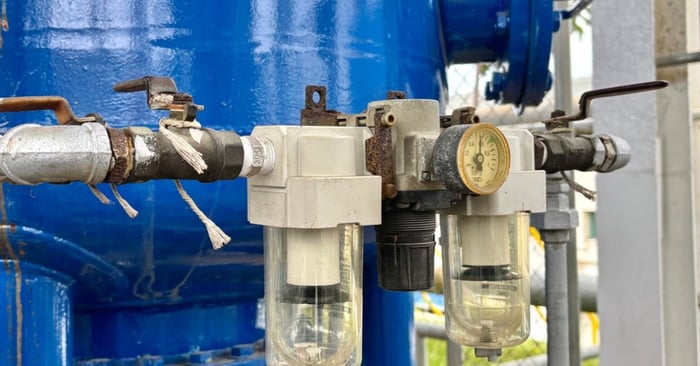
Contamination problems often leave visible or operational clues. Water appearing at tools, dirty filter bowls, or unusual residue can indicate that treatment equipment needs attention. Repeated component problems may also justify a closer look at compressed air quality.
A filter loaded with debris restricts airflow and can reduce pressure available downstream. Monitoring system behavior helps maintenance teams identify developing problems before they cause larger disruptions.
Inspections should consider the entire air path rather than one component in isolation. A new filter will not correct a failed drain, and a dryer cannot prevent debris from deteriorating piping. Looking at the complete system makes troubleshooting more effective.
Build Contamination Control Into Routine Maintenance
Preventing contamination works best as an ongoing maintenance practice rather than a response to equipment failure. Teams should keep filtration, moisture removal, and distribution-system condition in their regular inspection routines.
Maintenance should also account for changes in operating demand. Adding equipment or changing production requirements can alter airflow and treatment needs. Reviewing the compressed air system after significant changes helps confirm that existing components still suit the application.
Keep Compressed Air Equipment Protected
Preventing contamination in compressed air systems depends on controlling particles, moisture, and unwanted oil throughout the air path. Proper filtration and moisture management can help protect downstream equipment when teams pair them with consistent maintenance. PneumaticPlus offers pneumatic parts for industrial, commercial, and OEM applications, including filters, regulators, air dryers, fittings, and other components that support compressed air systems. Selecting components that match system requirements helps properly maintain cleaner air and dependable pneumatic performance.