Magnetic Starters for Air Compressors: What They Do, Why They Matter, and How to Choose the Right One

Table of Contents
Magnetic Starters for Air Compressors: What They Do, Why They Matter, and How to Choose the Right One
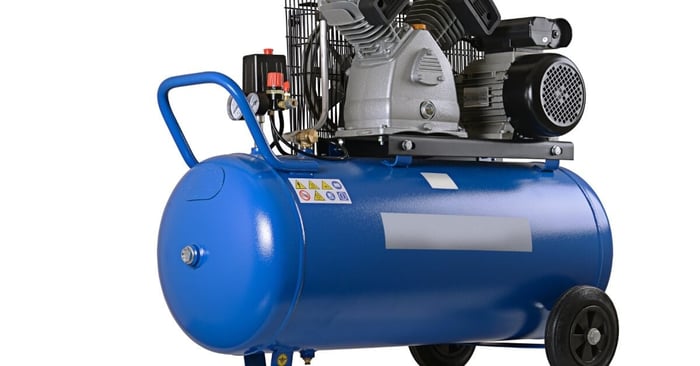
If your air compressor motor cycles hard, your pressure switch is taking too much abuse, or you need better motor protection, a magnetic starter is often the right solution. In compressor applications, a magnetic starter gives the system a dedicated motor control device with a contactor and overload protection, while allowing the pressure switch or control circuit to signal operation instead of carrying the full motor switching load.
That matters because compressor motors can start under demanding conditions and cycle repeatedly throughout the day. Choosing the right starter means matching the unit to the motor’s voltage, phase, overload range, enclosure type, and control circuit requirements, then having installation and verification handled by a qualified professional.
What Is a Magnetic Starter?
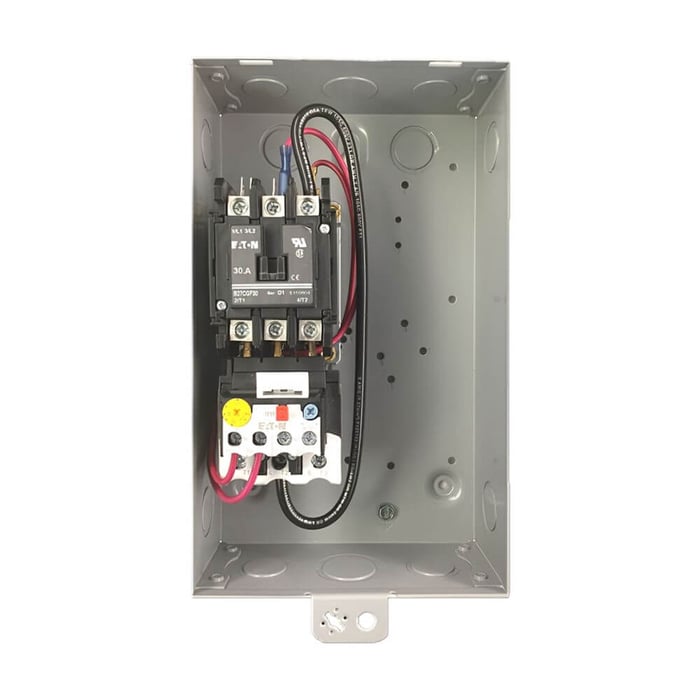
A magnetic starter is a motor control assembly that uses an electrically operated contactor to switch the motor on and off and an overload relay to help protect the motor from overheating. For air compressor owners, that usually means more reliable control and better motor protection than relying on a light-duty switch alone.
In many compressor systems, the pressure switch acts as the control signal while the starter handles the motor switching duty. This setup can be especially helpful on larger or frequently cycling compressors where the control circuit needs to be separated from the heavier motor load.
Why Compressor Owners Use Magnetic Starters
- They provide dedicated motor switching instead of forcing the pressure switch to carry the full load.
- They add overload protection that must be matched to the actual motor.
- They are commonly used in 5 HP and 7.5 HP compressor applications where startup and cycling demands are higher.
- They offer a more robust motor control solution for shop and industrial compressor systems.
Featured Models
If you are comparing Eaton and WEG magnetic starters for compressor use, these three models are among the most common options for 230V single-phase applications.
| Model | Best Fit | Manufacturer-Based Highlights |
|---|---|---|
| Eaton B27CGF30B040 | 5 HP, 230V, single-phase compressor applications | 30A amperage rating; single-phase; non-reversing; 24-40 FLA overload relay; 208-240 Vac 50/60 Hz coil; common control wiring; NEMA Type 1 enclosed; 30 A inductive full load; box lugs and quick connect terminals; CSA Certified; UL Recognized; 1-year warranty. |
| Eaton B27CGF40B040 | 7.5 HP, 230V, single-phase compressor applications | 40A amperage rating; single-phase; non-reversing; 24-40 FLA overload relay; 208-240 Vac 50/60 Hz coil; common control wiring; NEMA Type 1 enclosed; 40 A inductive full load; box lugs and quick connect terminals; CSA Certified; UL Recognized; 1-year warranty. |
| WEG ESWS-B32V24E-RM34 | 5 HP, 230V, single-phase enclosed starter applications | Direct single-phase start type; rated operational voltage up to 600V; control voltage 180-208V 50Hz / 208-240V 60Hz; TYPE1 degree of protection; ESWS reference series; UL508A approved; cULus certified. |
The Eaton B27CGF30B040 is a strong fit for many 5 HP 230V single-phase compressor setups, while the Eaton B27CGF40B040 is better suited to larger 7.5 HP single-phase applications. The WEG ESWS-B32V24E-RM34 is another enclosed single-phase option for buyers who want a WEG starter with TYPE1 protection and industrial enclosed-starter construction.
What to Verify Before Buying
Do not choose a magnetic starter by horsepower label alone. Before ordering, verify the motor nameplate and confirm voltage, phase, full-load current, control voltage, enclosure needs, and overload range.
- Confirm the compressor motor is single-phase and matches the starter’s intended application.
- Verify supply voltage and control voltage before installation.
- Make sure the overload relay range is appropriate for the motor’s actual nameplate full-load current.
- Check that the enclosure type matches the environment where the starter will be installed.
- Confirm all wiring, branch protection, and control requirements with a qualified professional.
Installation Cautions
Magnetic starters are industrial motor control products, not a casual DIY replacement part. Even if a unit appears to match the compressor horsepower, the actual application still has to be verified against the motor nameplate, power supply, control circuit, overload setting requirements, and installation environment.
- Always verify voltage, phase, and motor full-load current before ordering or energizing the starter.
- Do not assume a NEMA Type 1 or TYPE1 enclosure is suitable for washdown, wet, or outdoor locations.
- Improper overload selection or control wiring can lead to nuisance tripping, loss of protection, or equipment damage.
- Installation, wiring, overload adjustment, and startup verification should be handled by a licensed electrician or another qualified industrial professional.
For Compressor Owners
If your compressor pressure switch is wearing out, your motor protection is questionable, or you are replacing an older enclosed starter, a magnetic starter may be the right upgrade. The key is making sure the starter is matched to the actual motor and the compressor’s control requirements rather than selecting by horsepower alone.
For many buyers, the best starting point is to shop by voltage, phase, and horsepower range, then confirm full compatibility before installation. You can browse all available options here: Magnetic Starters.
Important Disclaimers
Authorized Distributor Verification: PneumaticPlus is an authorized distributor for the products listed on our platform. We verify the authenticity of all components sold and provide them in factory-new condition unless otherwise indicated. All products meet rigorous manufacturer specifications for industrial safety.
Technical Reference Disclaimer: While PneumaticPlus provides technical information and compatibility references as a courtesy, this data is for informational purposes only. Specifications are sourced from manufacturer data and are believed to be accurate at the time of publishing. Users must confirm all technical requirements and compatibility with the original equipment manufacturer (OEM) or a licensed professional before installation.
Installation and Electrical Safety Disclaimer: Magnetic starters are industrial electrical control products intended for properly designed motor control circuits. Selection, wiring, overload setting, branch protection, grounding, and commissioning must be performed by a licensed electrician or other qualified professional familiar with the applicable equipment, OEM requirements, and local electrical code. Improper selection or installation can result in equipment damage, nuisance tripping, loss of motor protection, electrical shock, or fire.
Application Suitability Disclaimer: Product listings, blog content, and compatibility references do not guarantee fitness for a particular compressor, pressure switch, motor, or operating environment. Buyers are responsible for verifying phase, voltage, control voltage, full-load current, enclosure rating, environmental conditions, and all required protections before use.
FAQs
What does a magnetic starter do on an air compressor?
A magnetic starter uses a contactor to switch the compressor motor on and off and an overload relay to help protect the motor from overheating. In many compressor systems, it allows the pressure switch or control circuit to signal operation without carrying the full motor switching load.
How do I choose the right magnetic starter?
Start with the motor nameplate, not just horsepower. Verify voltage, phase, full-load current, overload range, control voltage, enclosure type, and application requirements before selecting a model.
What is the difference between the Eaton B27CGF30B040 and B27CGF40B040?
The Eaton B27CGF30B040 is a 30A single-phase non-reversing definite purpose starter with a 24-40 A overload range, while the Eaton B27CGF40B040 is a 40A single-phase non-reversing definite purpose starter with the same 24-40 A overload range. Both Eaton models use a 208-240 Vac 50/60 Hz coil and NEMA Type 1 enclosed construction, but they are commonly applied to different compressor motor sizes.
What are the key specs of the WEG ESWS-B32V24E-RM34
WEG lists the ESWS-B32V24E-RM34 as an enclosed starter with direct single-phase start type, reference series ESWS, rated operational voltage up to 600V, control voltage of 180-208V at 50 Hz / 208-240V at 60 Hz, and TYPE1 degree of protection. WEG also states that its enclosed starters are UL508A approved and cULus certified.
Can I install a magnetic starter myself?
Magnetic starters are industrial electrical control products and should be selected, wired, and commissioned only by a licensed electrician or another qualified professional. Improper selection, wiring, overload setting, or commissioning can create serious safety risks and equipment damage.
Is a NEMA Type 1 or TYPE1 enclosure suitable for outdoor use?
Not by default. The Eaton models are listed as NEMA Type 1 enclosed and the WEG model is listed as TYPE1, so the application environment should be reviewed carefully before installation. Buyers should confirm enclosure suitability with the manufacturer, OEM, or a qualified professional before use in any demanding location.
Why shouldn’t I choose a magnetic starter by horsepower alone?
Horsepower is only one part of the selection process. The correct starter also depends on the motor’s voltage, phase, full-load current, overload range, control voltage, enclosure type, and the specific compressor control setup