Detecting and Repairing Costly Compressed Air Leaks

Compressed air systems power everything from heavy machinery to delicate pneumatic tools. Despite their critical role in manufacturing and processing, these systems often suffer from a silent plague that drains budgets and efficiency alike. Leaks in the system might seem like minor annoyances, but they cumulatively represent a massive financial drain on operations. Facility managers who prioritize detecting and repairing costly compressed air leaks often find they can reclaim significant portions of their energy bill while extending the life of their equipment.
The Hidden Financial Drain on Operations
Energy Costs
The most immediate impact of a leaky compressed air system appears on the monthly energy bill. Compressed air is one of the most expensive utilities in a manufacturing environment because the process of compressing air is inherently inefficient. A significant amount of electrical energy converts to heat during compression, meaning that the air making it into the lines is already a high-value commodity. When that air escapes through a loose fitting or a cracked hose, the compressor must work harder and run longer to maintain the required system pressure. This artificial demand forces the system to consume electricity not for production, but simply to feed the leaks.
Equipment Longevity
Beyond the direct energy costs, leaks impose a severe penalty on the longevity of the equipment itself. Air compressors cycle on and off or modulate their capacity based on demand. When leaks create a constant, artificial demand, the compressor runs more frequently or for extended periods, leading to increased wear and tear on internal components. This accelerated degradation shortens the lifespan of the unit, leading to premature capital expenditure for replacements. The harder a compressor works, the more moisture and contaminants it adds to the system, which can overwhelm air dryers and filters and damage pneumatic tools and actuators.
System Performance
System performance also degrades significantly when leaks go unchecked. Pneumatic tools rely on stable pressure to function correctly. If the system pressure fluctuates or drops due to excessive leakage, tools may not deliver the required torque, and automation equipment may become sluggish or erratic. This inconsistency can lead to production defects and quality control issues, further compounding the financial losses.
Strategies for Identification
Auditory Inspection
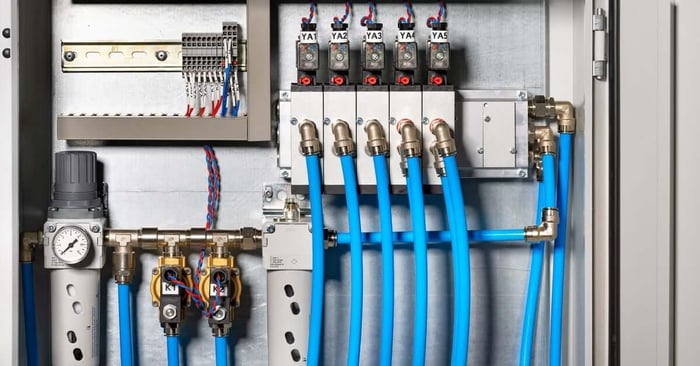
Finding these leaks requires a systematic approach, as the loud environment of a typical factory floor often masks the tell-tale hiss of escaping air. The most basic method involves an auditory inspection during non-production hours. When the facility is quiet, maintenance personnel can walk the lines and listen for the sound of air escaping. This method is effective for identifying large leaks. However, it often fails to detect smaller, yet cumulative, leaks that occur in hard-to-reach areas or are simply too quiet for the human ear to register.
Ultrasonic Leak Detector
For a more comprehensive assessment, ultrasonic leak detectors have become the industry standard. These sophisticated handheld devices detect the high-frequency turbulence created by escaping air, which is inaudible to the human ear. The device converts these ultrasonic signals into a sound that the operator can hear through headphones and indicates the intensity on a display screen. This technology allows technicians to pinpoint leaks with extreme accuracy, even from a distance and in noisy environments. Using ultrasonic detectors enables the identification of leaks that would otherwise go unnoticed until they became major failures.
Soap Solution Test
Once you have identified a suspected leak area, the soap solution test serves as a simple yet highly effective verification method. By applying a mixture of soapy water to the suspected fitting or connection, technicians can visually confirm the leak. Bubbles will form immediately where air is escaping, providing definitive proof of the leak's location. This low-tech method pairs perfectly with high-tech ultrasonic detection to ensure you don’t miss any leaks.
Effective Repair Protocols
Loose Connections
Loose connections cause a significant percentage of air leaks. In many cases, simply tightening a coupling, flange, or pipe fitting can resolve the issue immediately. However, technicians must be careful not to overtighten, as this can strip threads or crack components, creating a worse problem than the original leak. If tightening does not stop the airflow, the technician should disassemble, clean, and reseal the fitting.
Threaded Connections
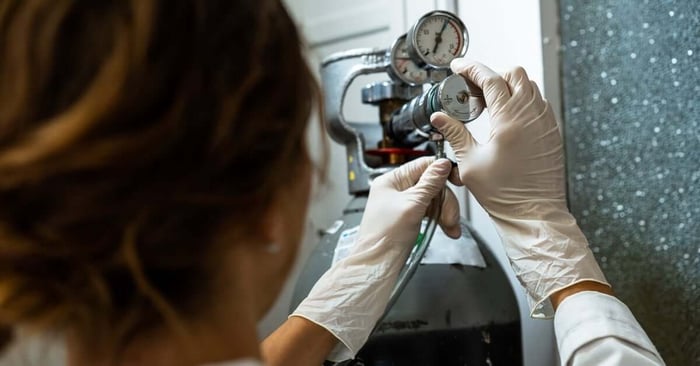
When dealing with threaded connections, the application of a proper sealant is essential. PTFE tape or a high-quality thread sealant paste can fill the microscopic gaps between mating threads, creating an airtight bond. When applying tape, you must wrap it in the direction of the threads to prevent it from bunching up or shredding during assembly. Technicians should also ensure that no tape extends beyond the end of the fitting, as loose fragments can travel downstream and clog sensitive pneumatic valves or cylinders.
Hoses and Tubes
Hoses and tubes represent another common failure point, often degrading due to age, vibration, or physical damage. Avoid using tape to repair a hose; it is rarely a permanent solution and technicians generally discourage it. The most effective repair for a damaged hose involves cutting out the bad section and installing a new splice, or preferably, replacing the entire hose assembly.
Push-To-Connect Fittings
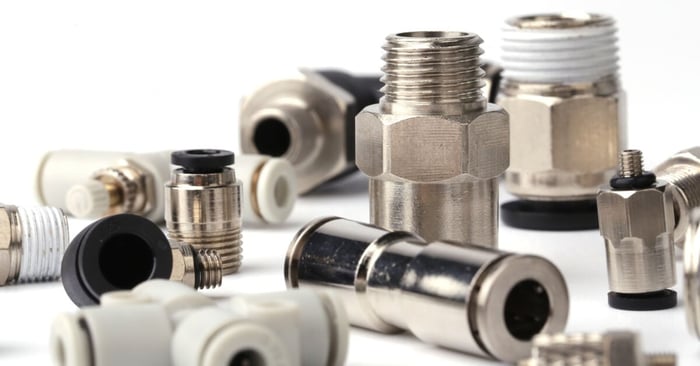
Push-to-connect fittings, while convenient, can also develop leaks. This often happens if someone cuts the tube at an angle or damages the O-ring inside the fitting. Ensuring a square cut on the tubing and checking the internal seal usually resolves these issues.
Securing Efficiency for the Long Term
The management of a compressed air system is an ongoing battle against entropy. As seals age, vibration loosens fittings, and hoses wear against machinery, leaks will inevitably occur. However, ignoring them is a luxury no competitive business can afford. The compounded cost of wasted energy, accelerated equipment wear, and potential production quality issues makes leak management a top priority for efficient facility operation. By committing to a routine of detecting and repairing costly compressed air leaks, businesses protect their bottom line and ensure their pneumatic systems operate at peak performance.
Looking to upgrade your infrastructure with durable, leak-resistant components? PneumaticPlus offers a comprehensive range of high-quality compressed air systems and accessories designed to enhance the reliability and efficiency of your operations. Browse our selection of pneumatic parts and solutions to find the right option for your needs.