How Industrial Air Compressors Are Commonly Used

Table of Contents
- Manufacturing and Assembly Operations
- Automotive Repair and Maintenance Facilities
- Construction and Job Site Applications
- Food and Beverage Production
- Industrial Processing and Energy Facilities
- Sandblasting and Surface Preparation
- Packaging and Material Handling Systems
- Why Industrial Air Compressors Remain Essential
Industrial air compressors support many industrial operations because they provide dependable compressed air for machinery and equipment. Businesses in manufacturing, automotive service, construction, and processing facilities rely on compressed air to keep operations running efficiently.
Many companies choose pneumatic systems because they perform reliably in demanding environments while supporting continuous production schedules. Understanding the common uses for industrial air compressors helps businesses select equipment that matches operational demands and long-term performance needs.
Manufacturing and Assembly Operations
Manufacturing facilities rely heavily on industrial air compressors to support production equipment and assembly systems. Compressed air powers pneumatic cylinders, automated machinery, robotic systems, and conveyor controls used throughout manufacturing plants. Many assembly lines require consistent airflow to maintain production speed and avoid interruptions during operation.
Compressed air also supports material handling systems that move products between different stages of production. Many facilities use pneumatic systems because these systems respond quickly and handle continuous workloads efficiently. In facilities that produce automotive parts, electronics, metal components, or consumer products, compressed air often supports nearly every stage of the manufacturing process.
Many factories also use compressed air to remove debris, moisture, or dust from products before packaging. Air-powered cleaning systems help maintain cleaner production environments while improving product quality. In high-volume manufacturing operations, dependable airflow contributes directly to smoother production schedules.
Automotive Repair and Maintenance Facilities
Automotive repair facilities use industrial air compressors every day for vehicle maintenance and repair work. Pneumatic impact wrenches, grinders, ratchets, tire inflation systems, and paint sprayers all depend on compressed air for reliable operation. Technicians rely on pneumatic tools because they provide strong performance while remaining durable during continuous daily use.
Larger automotive facilities often install centralized air systems that distribute compressed air throughout multiple service bays. This setup allows technicians to operate several tools at once without relying on portable compressors in every work area. Reliable airflow helps shops maintain productivity while reducing downtime caused by inconsistent tool performance.
Body shops also depend on compressed air for painting and refinishing work. Spray painting systems require steady airflow to achieve smooth and even coatings on vehicles and components. Sanding equipment and polishing tools also rely on pneumatic systems during vehicle restoration and repair projects.
Construction and Job Site Applications
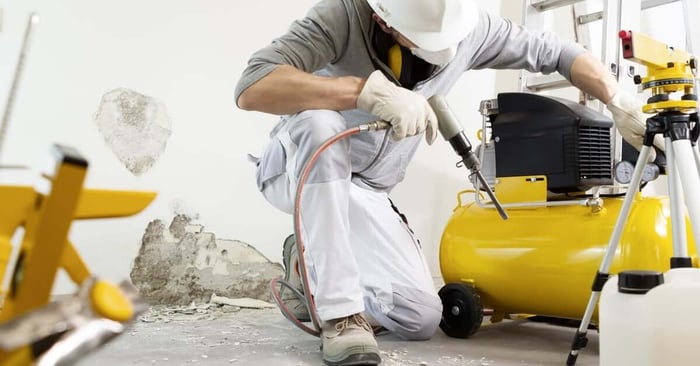
Construction crews frequently use industrial air compressors to power tools and equipment in rugged job site environments. Nail guns, jackhammers, concrete breakers, and compactors all rely on compressed air because pneumatic tools perform well under demanding conditions.
Portable industrial compressors provide flexibility for contractors working in locations where permanent power systems may not yet exist. Pneumatic equipment also performs reliably in dusty or outdoor environments where electrical systems can face additional wear. Contractors often prefer air-powered tools because they can operate multiple pieces of equipment from one compressor system.
Road construction and commercial building projects commonly use industrial air compressors for drilling, demolition, framing, and finishing work. Reliable compressed air allows crews to maintain productivity while handling physically demanding tasks throughout the project timeline.
Food and Beverage Production
Food and beverage processing facilities use industrial air compressors to support production lines, packaging systems, and pneumatic controls. Compressed air helps move products through filling stations, sealing equipment, and automated packaging machinery during high-volume production.
Many food production facilities require clean and dry compressed air to maintain sanitary operating conditions. Air treatment systems help remove contaminants and moisture before compressed air enters sensitive production areas. Reliable airflow supports product consistency while helping facilities maintain operational efficiency throughout long production shifts.
Compressed air also supports cleaning procedures within processing facilities. Air-powered systems help operators clean equipment and production lines efficiently during maintenance or product changeovers. In packaging operations, pneumatic controls help maintain precision and speed while products move through the facility.
Industrial Processing and Energy Facilities
Industrial processing plants and energy facilities depend on compressed air for automation systems and process controls. Refineries, power plants, and chemical facilities often use pneumatic systems because compressed air provides dependable operation in demanding industrial environments.
Compressed air powers valve actuators, monitoring systems, and instrumentation equipment used throughout these facilities. Pneumatic controls help operators maintain stable production conditions while supporting continuous operation schedules. In many industrial settings, compressed air systems also contribute to workplace safety by supporting emergency shutdown systems and automated controls.
Maintenance teams within processing facilities use industrial air compressors for pneumatic tools, equipment cleaning, and repair work. Reliable air systems help support both production efficiency and long-term equipment maintenance across large industrial operations.
Sandblasting and Surface Preparation
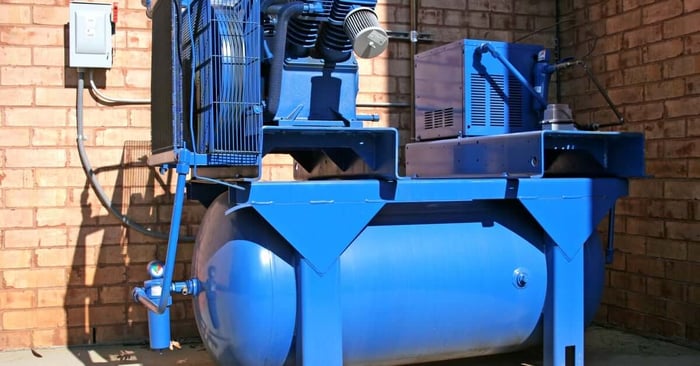
Facilities often use industrial air compressors for abrasive blasting and surface preparation applications. Sandblasting systems require strong and consistent airflow to remove paint, rust, corrosion, and coatings from metal or concrete surfaces.
Fabrication shops, manufacturers, and industrial maintenance companies use abrasive blasting before applying paint or protective coatings. Consistent air pressure helps operators achieve even blasting performance across large surfaces and complex equipment. Heavy-duty industrial compressors are especially important for blasting projects that require extended periods of continuous operation.
Surface preparation remains critical in industries where coating durability affects long-term equipment performance. Reliable compressed air helps businesses complete these projects efficiently while maintaining quality standards.
Packaging and Material Handling Systems
Warehouses and distribution facilities frequently use industrial air compressors to support packaging equipment and material handling systems. Pneumatic conveyors, automated sorting systems, and packaging machinery rely on compressed air to maintain steady operation throughout the workday.
Compressed air helps improve productivity in facilities that process large volumes of products for shipping and distribution. Pneumatic actuators and air-powered controls support repetitive tasks while helping equipment maintain consistent movement and positioning. Many distribution centers rely on centralized compressor systems to provide airflow across multiple operational areas.
Packaging systems also use compressed air to seal products, apply labels, and support automated handling equipment. Reliable airflow helps businesses maintain efficient order processing while reducing delays within shipping operations.
Why Industrial Air Compressors Remain Essential
Industrial air compressors remain essential across many industries because compressed air provides dependable power for tools, automation systems, and production equipment. Manufacturing facilities, automotive shops, construction crews, processing plants, and distribution centers all rely on compressed air to support efficient daily operations. Understanding the common uses for industrial air compressors helps businesses choose systems that align with operational demands and long-term performance goals.
PneumaticPlus sells a wide variety of pneumatic parts including air compressors, fittings, air dryers, filter regulator lubricators, and other components designed to support industrial, commercial, and OEM applications. Browse our selection to learn how you can enhance your pneumatic systems with dependable, long-lasting solutions.