
The Various Types of Pneumatic Mufflers Explained
Posted by PneumaticPlus on 7th May 2026
Pneumatic systems generate exhaust noise and airflow turbulence that can affect performance, safety, and workplace conditions. That is why understanding the various types of pneumatic mufflers is essential for anyone working with compressed air equipment. The right muffler selection directly improves efficiency, reduces noise, and extends component life.
Pneumatic mufflers play a critical role in controlling exhaust flow while minimizing sound levels in demanding industrial environments. This guide breaks down how different mufflers function, where they perform best, and what considerations matter most when selecting one for a system.
Why Pneumatic Mufflers Matter in Compressed Air Systems
Every time compressed air exhausts from a valve or actuator, it releases energy in the form of noise and rapid airflow. Without proper control, that discharge creates excessive sound levels that can disrupt operations and lead to unsafe working conditions. Unmanaged exhaust noise can contribute to compliance challenges and operator fatigue.
Mufflers reduce this noise by diffusing and slowing the exhaust air before it exits into the atmosphere. They also help prevent debris from entering exhaust ports, which protects internal components from contamination. When properly selected, a muffler supports system stability while maintaining airflow efficiency.
Beyond noise reduction, mufflers contribute to smoother operation. They reduce backpressure fluctuations and help maintain consistent exhaust flow, which is critical in precision-driven pneumatic systems. This makes them a small but essential component in achieving reliable performance.
How Pneumatic Mufflers Work
Pneumatic mufflers operate by dispersing compressed air through a porous or baffled structure. Instead of allowing a sudden release of pressurized air, they break it into smaller streams that exit more gradually. This diffusion process lowers sound intensity and reduces turbulence.
The internal structure of a muffler determines how effectively it balances noise reduction with airflow capacity. Some designs prioritize maximum sound suppression, while others focus on maintaining minimal backpressure. You must consider both factors, as excessive restriction can negatively impact system performance.
Materials also play a key role in function. Metallic mufflers tend to handle higher pressures and temperatures, while polymer-based designs often offer corrosion resistance and lightweight advantages. Choosing the right construction depends on the operating environment and application demands.
Sintered Bronze Pneumatic Mufflers
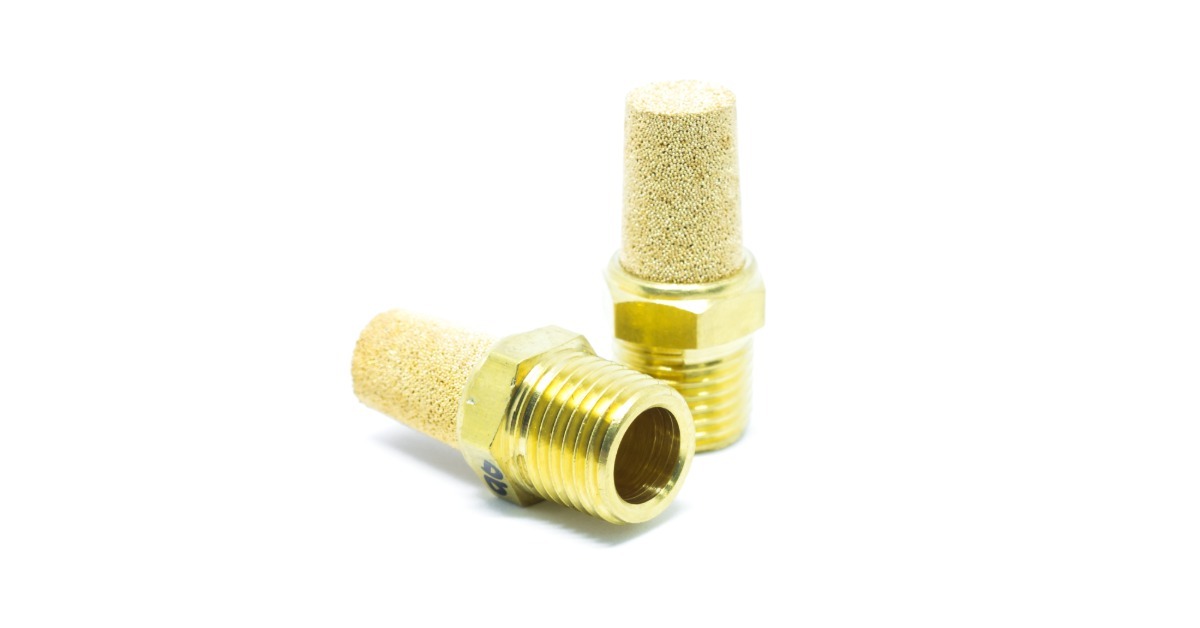
Sintered bronze mufflers remain one of the most widely used options in industrial applications. These mufflers consist of compressed bronze particles that form a porous structure, allowing air to pass through while dampening sound. Sintered bronze mufflers perform reliably in general-purpose systems that require durability and consistent airflow.
Their main advantage lies in their balance between noise reduction and airflow efficiency. The porous design provides effective sound attenuation without creating excessive backpressure. This makes them suitable for valves, cylinders, and other common pneumatic components.
They also offer strong resistance to wear and temperature fluctuations. In environments where equipment runs continuously, sintered bronze mufflers maintain performance over time without significant degradation. However, they can become clogged in dirty environments, so filtration upstream remains important.
Plastic Pneumatic Mufflers
Plastic mufflers provide a lightweight and corrosion-resistant alternative to metal designs. These mufflers work best in environments where moisture or chemical exposure can degrade traditional materials. They perform well in applications that prioritize cost efficiency and resistance to harsh conditions.
Their construction typically includes internal chambers that help disperse airflow. While they may not always match the durability of metal options, they offer sufficient performance for many standard applications. They also reduce installation weight, which can be beneficial in compact systems.
One important consideration is temperature tolerance. Plastic mufflers may not handle extreme heat as effectively as metal counterparts, so they are best suited for moderate operating conditions. When used correctly, they provide a reliable and economical solution.
Stainless Steel Pneumatic Mufflers
Stainless steel mufflers work well in demanding environments where corrosion resistance and strength are critical. Industries such as food processing, chemical plants, and outdoor operations commonly use these mufflers where durability is essential.
They handle high pressure, high temperature, and exposure to corrosive elements without compromising performance. Their robust construction ensures long service life, even under continuous operation. This makes them ideal for applications where downtime is not acceptable.
Although they typically come at a higher cost, the durability and reliability they provide often justify the investment. When system integrity and longevity are priorities, stainless steel mufflers deliver consistent results.
Adjustable Pneumatic Mufflers
Adjustable mufflers offer flexibility by allowing control over airflow and noise levels. These designs include a mechanism that enables fine-tuning of exhaust restriction based on system requirements. They are especially useful in applications where operating conditions change frequently.
By adjusting the flow rate, you can optimize performance without replacing components. This adaptability makes them valuable in testing environments or systems with variable loads. They also help achieve a balance between noise reduction and response time.
Improper adjustment can lead to excessive backpressure, which affects system efficiency. Monitoring performance and making gradual changes helps avoid unintended consequences. When used correctly, adjustable mufflers provide precise control.
High-Flow Pneumatic Mufflers
High-flow mufflers support systems that require minimal restriction while still reducing noise. Manufacturers commonly use them in high-speed or high-volume applications where airflow must remain unrestricted.
Their internal design prioritizes airflow capacity, which helps prevent pressure buildup. While they may not reduce noise as aggressively as other types, they maintain system performance without compromise. This trade-off is essential in applications where speed and efficiency take precedence.
Selecting a high-flow muffler requires careful evaluation of system demands. Matching the muffler capacity to the exhaust flow ensures optimal operation and avoids performance limitations.
Factors To Consider When Choosing a Pneumatic Muffler
Selecting the right muffler involves more than choosing a material or design. Airflow requirements, operating pressure, and environmental conditions all influence the best choice for a system.
Noise reduction goals also play a role. Some applications require maximum sound suppression, while others prioritize maintaining airflow. Understanding these priorities helps narrow down the options effectively.
Do not overlook maintenance considerations. Mufflers that are easy to clean or replace can reduce downtime and extend system life. In environments with contaminants, choosing a design that resists clogging becomes especially important.
Reliable Muffler Solutions From PneumaticPlus
Understanding the various types of pneumatic mufflers allows for informed decisions that improve system performance, reduce noise, and protect equipment over time. Each muffler type offers distinct advantages depending on operating conditions, and selecting the right one ensures efficient and reliable system operation.
PneumaticPlus offers a comprehensive selection of air compressor mufflers designed to meet the needs of industrial, commercial, and OEM applications. As a trusted distributor of pneumatic components, we provide durable and performance-focused solutions that support long-term reliability. Browse our selection to learn more.